Media
NO STAND. NO BADGE. STILL IN THE ROOM. HOW BRANDS CAN OWN THE CONFERENCE MOMENT
Every industry has its moment: the few days each year when investors, buyers, operators and decision-makers gather in one city to meet, talk and do business.
For brands, these events are hugely valuable. They are also expensive and difficult to stand out in. A stand, delegate passes and a sponsorship package can quickly reach six figures, and on a busy exhibition floor every brand is competing for the same attention.
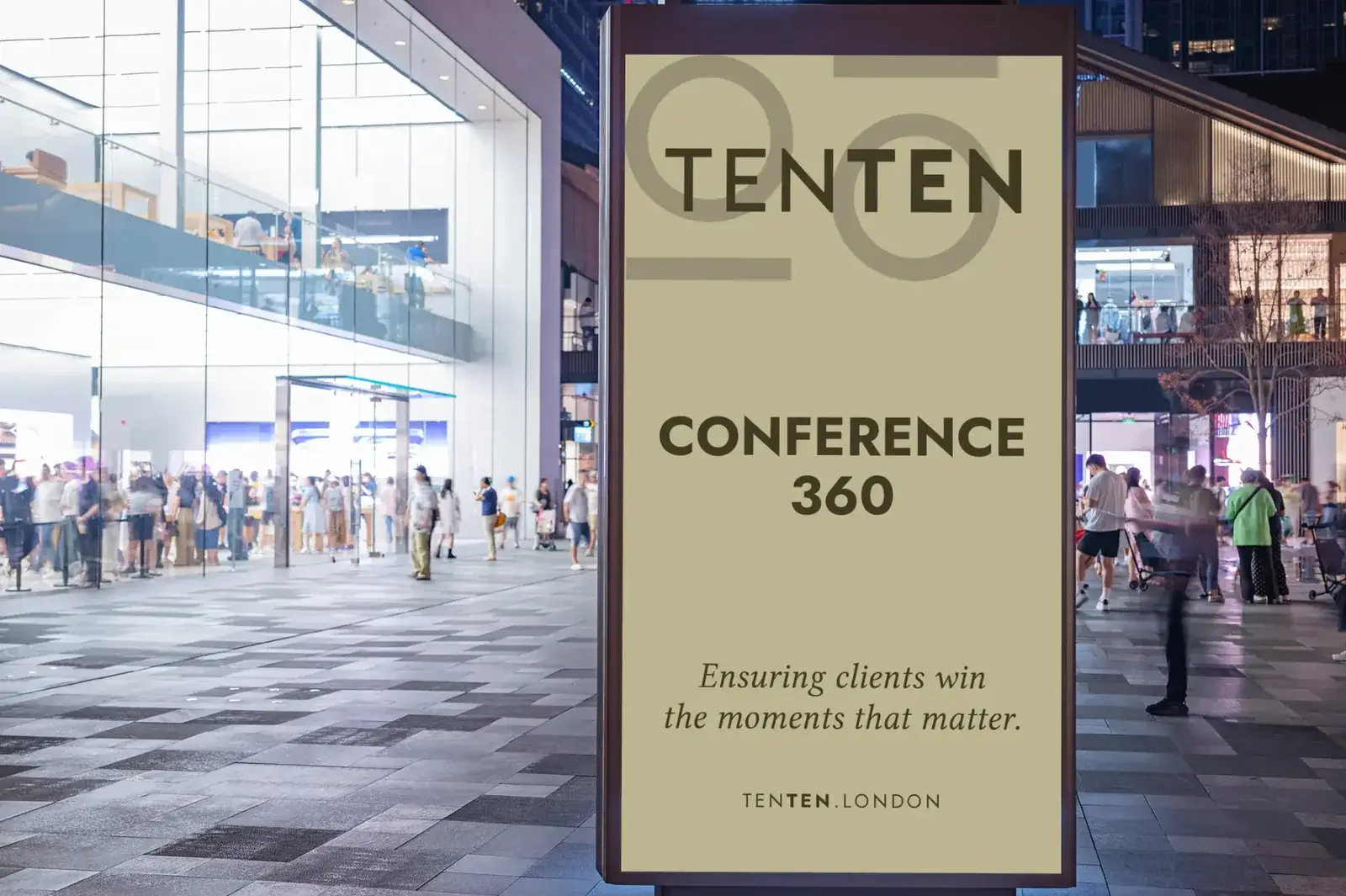
At TENTEN, we have developed Conference 360, a fully managed digital activation that allows brands to build a meaningful presence around conferences, trade shows and congresses, whether or not they are exhibiting.
Our view is that physical presence at an event remains valuable, but it is no longer the only way to be part of the conversation.
Why the conference moment matters
The audience at a major industry event is rare. It is concentrated, senior and focused on the business of its sector.
However, that audience does not only exist inside the venue.
Delegates begin planning weeks before they travel, researching speakers, arranging meetings and building their agendas. During the event, they spend much of their time in stations, taxis, hotels, restaurants and fringe events. Many of the conversations that begin at a conference are concluded weeks later, back in the office.
Yet most brand activity at events is concentrated into a few days and a few hundred square metres. The wider journey, before, during and after, is often left unclaimed.
That is where the opportunity lies.
What is Conference 360?
Conference 360 is a hyperlocal digital activation built around the full journey of an event audience.
It combines LinkedIn and Meta targeting, programmatic display, geofencing, digital out-of-home and in-journey advertising, planned and managed as a single campaign across three phases.
There is no need for a stand, a badge or registration fees. The brand is present where the audience is, at the moments that matter.
For brands that are already exhibiting or sponsoring, the same approach can extend that investment well beyond the venue walls and the closing session.
How it works
1. Before the event: build familiarity
In the weeks leading up to an event, delegates are deciding who to see and what to prioritise.
We reach them through LinkedIn targeting by job function, seniority, company and sector, Meta audiences built around relevant interests and behaviours, and video and display advertising across premium publishers.
The objective is for the brand to be familiar before the delegate arrives.
2. During the event: own the location
This is the core of the activation.
Using geofencing, we serve Meta and LinkedIn advertising to people physically within a defined radius of the venue, layered with professional filters such as sector and seniority. Digital screens within walking distance of the venue are bought by place and time, so they run when delegates are moving between the station, the venue and their hotels. Uber in-app advertising reaches delegates as they travel around the city.
These channels are sequenced rather than run in isolation: station screens in the morning, journey ads during the commute, and screens around the hotel and fringe circuit in the evening. A single core creative runs across every touchpoint, with a clear call to action such as booking a short meeting.
3. After the event: convert the interest
The decisions that follow an event are usually made back at the office.
Anyone who entered the geofenced area, or engaged with the campaign during the event, becomes a warm audience. We retarget them across LinkedIn, Meta and display with follow-up messaging designed to turn event-week attention into meetings, partnerships and pipeline.
Where it works
Conference 360 can be applied wherever an industry gathers in one place. That includes real estate and investment summits, travel trade shows and MICE events, medical and scientific congresses, technology conferences and retail expos.
The format changes from sector to sector, but the conditions are consistent: a concentrated, high-value audience, a defined location and a limited window of time.
These are exactly the conditions in which precise, location-led digital media performs well.
What makes the approach effective
Four principles underpin every Conference 360 activation.
1. Precision over reach
Named-account and professional targeting focuses spend on the investors, buyers and partners expected to attend, rather than on broad audiences.
2. Place and time
Screens and geofenced media are planned around how delegates actually move, so the brand appears when and where the audience is.
3. Sequencing
Each channel has a defined role in the journey. Together, they build familiarity, create presence and prompt a response.
4. Creative efficiency
One core idea, adapted across every channel, keeps production light and the message consistent.
Because the targeting, geofences and channel plan are prepared in advance, the brand only needs to bring its message and its objectives. TENTEN manages the activation from planning through to reporting.
Our view
Physical presence at conferences will continue to matter. But the way brands show up around events has not kept pace with the media now available.
The tools to reach an event audience precisely already exist. What has been missing is a planned approach that follows the rhythm of an event, from the first agenda planning to the follow-up meeting.
That is why we built Conference 360. It gives brands that are not exhibiting a credible way into the conversation, and gives those that are a way to make their investment work harder.
The most valuable moments in any sector happen when its people come together. Brands no longer need a stand to be part of them.